Quick answer
Choose a folding manual wheelchair for occasional use and travel, a commode wheelchair when toileting is difficult, and an electric wheelchair when the user can't propel themselves and needs independence. Make sure the seat is slightly wider than the hips, the footrests adjust, and the brakes lock firmly.
The right wheelchair gives someone back their independence; the wrong one is uncomfortable and ends up unused. This guide explains the main types of wheelchair, who each suits, and what to check before you buy.
The main types of wheelchair
| Type | Best for | Things to know |
|---|---|---|
| Folding manual | Everyday use, travel, hospital visits | Folds to fit in a car boot; propelled by the user or pushed by an attendant |
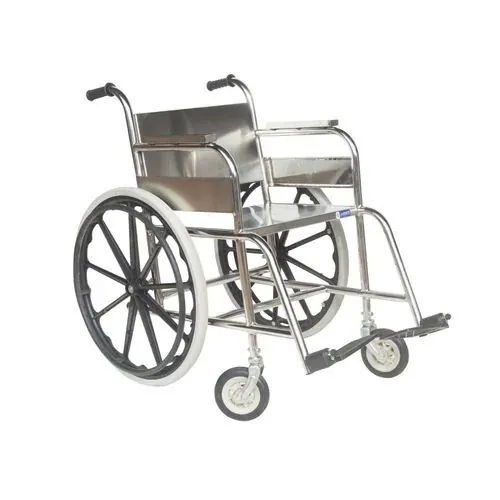
| Fixed-frame manual | Hospitals, clinics, airports, regular heavy use | Rigid and durable; doesn't fold |
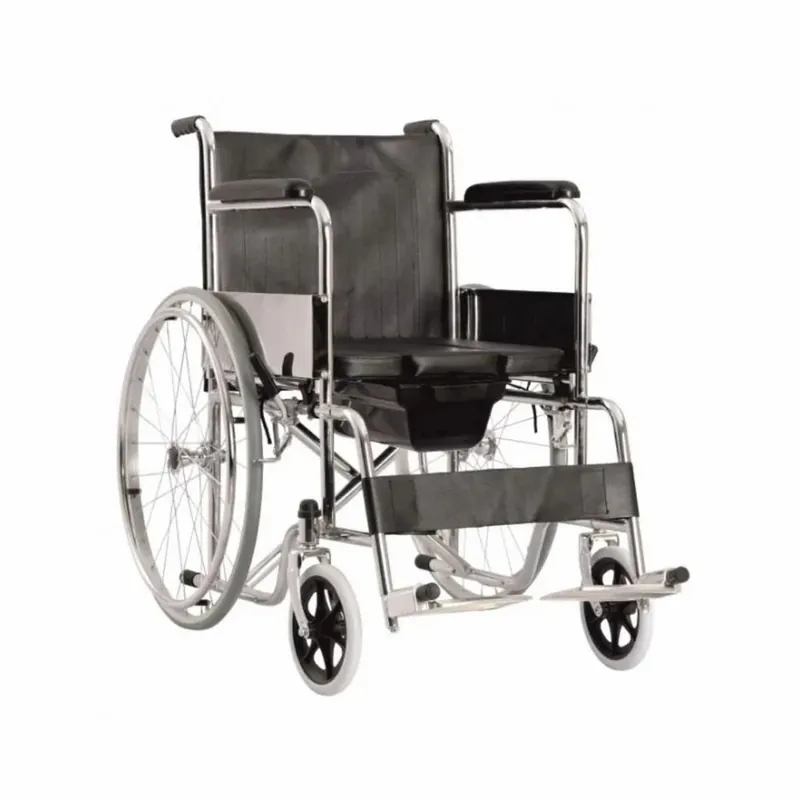
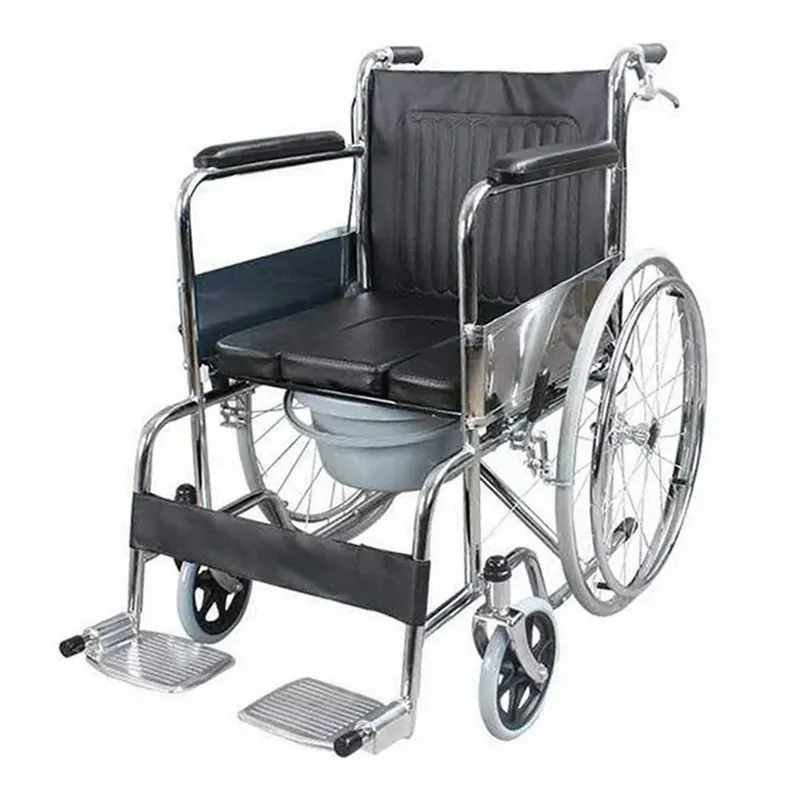
| Commode wheelchair | Users who find it hard to get to the toilet | Built-in commode seat; doubles as a transfer chair at home |
| Chrome / stainless | Hospitals and humid or wet environments | Corrosion-resistant finish that's easy to clean |
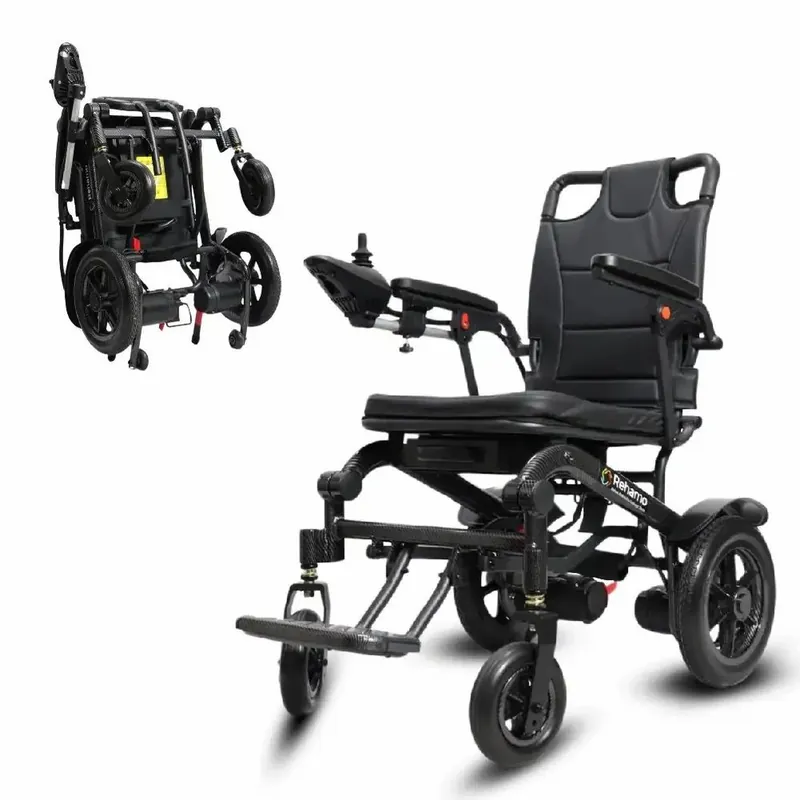
| Electric (powered) | Users who can't propel themselves, or need to travel longer distances independently | Joystick control and a rechargeable battery; heavier and costlier |
Manual wheelchairs
A manual wheelchair is the most common choice. Large rear wheels with push rims let the user move themselves; handles at the back let an attendant push. A folding model like the Manual Folding Wheelchair is the most practical for home and travel. A fixed frame such as the Fixed Wheel Chair MS is sturdier for institutions where chairs are used all day. The Wheel Chair Chrome has a chrome finish that resists rust and cleans easily.
Commode wheelchairs
A Commode Wheel Chair has a seat with an opening and a pan underneath, so the user can be wheeled to a convenient spot, or over the toilet, without a difficult transfer. Families caring for elderly or post-surgery patients often find it one of the most useful pieces of equipment in the house.
Electric wheelchairs
An Electric Wheel Chair is driven with a joystick and powered by a rechargeable battery. It suits people with limited arm strength, conditions like stroke or arthritis, or anyone who wants to move around independently without tiring. Check that the user can operate the joystick comfortably, that you can charge it easily at home, and that it fits through your doorways.
How to choose: a quick checklist
- Who will move the chair? The user (manual with push rims), an attendant (manual), or a motor (electric).
- Where will it be used? Indoors, outdoors, in a car? Folding chairs travel best; check doorway widths at home.
- How long will the user sit? Long hours need good cushioning and correct fit.
- Does toileting need help? If yes, consider a commode wheelchair.
- Fit: the seat should be slightly wider than the user's hips (roughly 2–5 cm, or about one finger-width each side), feet should rest flat on the footrests, and arms should rest comfortably on the armrests.
- Brakes and build: wheel locks should hold firmly; check the frame, upholstery and tyres.
For users with specific medical needs (pressure sores, spinal injury, poor posture control), ask a physiotherapist or occupational therapist to assess them before buying.
Wheelchair or walker?
If the person can stand and walk short distances safely, a walker or walking stick may keep them more active. See Walker or Walking Stick? How to Choose and Set the Right Height. Many families keep both: a walker for around the house and a folding wheelchair for longer trips.
Frequently asked questions
Which wheelchair is best for elderly people at home?
A folding manual wheelchair suits most elderly users at home because it is light enough for an attendant to push and folds for travel. If toileting is difficult, a commode wheelchair is very helpful. For users who want to move independently but cannot propel a manual chair, consider an electric wheelchair.
How do I measure for a wheelchair?
Measure the user's hip width while seated and choose a seat slightly wider, about 2–5 cm. Feet should rest flat on the footrests with thighs supported, and the backrest should support the lower and mid back.
What is a commode wheelchair?
A commode wheelchair has a seat with an opening and a removable pan underneath, so it can be used as a toilet chair as well as for moving the user around. It reduces difficult transfers for elderly and post-surgery patients.
Is an electric wheelchair worth it?
It is worth it when the user cannot propel a manual chair or wants to travel longer distances independently. It costs more, is heavier and needs regular charging, so a manual chair is often enough when an attendant is always available.
Need help choosing?
Our team in Pune can recommend the right equipment for your patient or facility, and we deliver across India.