Quick answer
Use a single walking stick for mild balance support, a tripod or quadripod stick for more stability, and a walker when you need support on both sides. Set the handle at the level of the wrist crease with arms hanging down, so the elbow bends slightly when you hold it.
Walking aids help people stay active and independent after surgery or injury, and as balance changes with age. Choosing between a stick and a walker comes down to how much support the person needs. Setting it up correctly matters just as much.
Which walking aid gives how much support?
| Aid | Support | Good for |
|---|---|---|
| Single walking stick | Light | Mild balance problems, minor pain on one side |
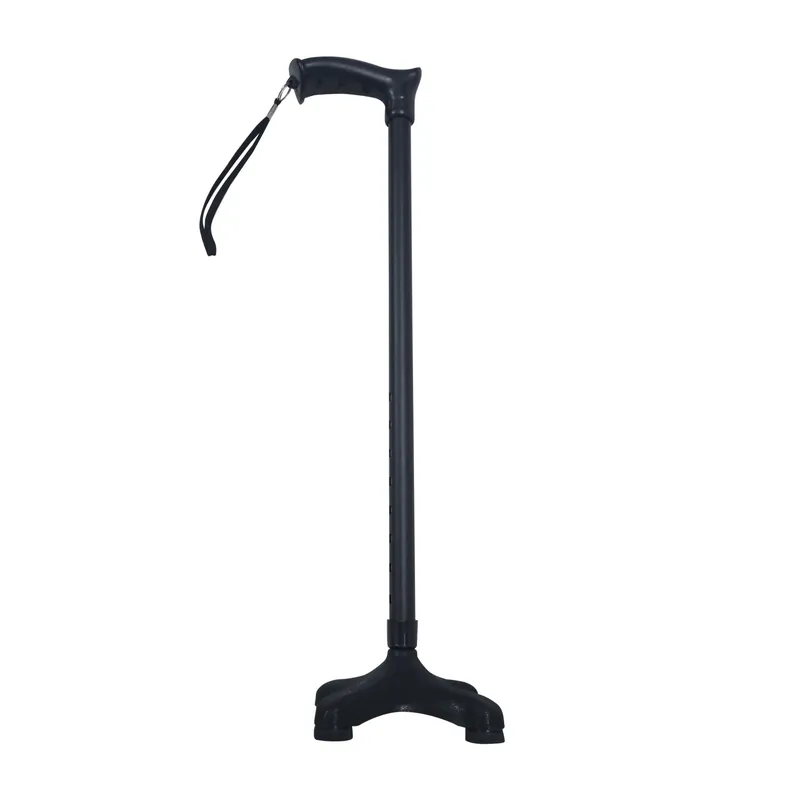
| Tripod stick (3 feet) | Moderate | Needs more stability than a single stick; stands on its own |
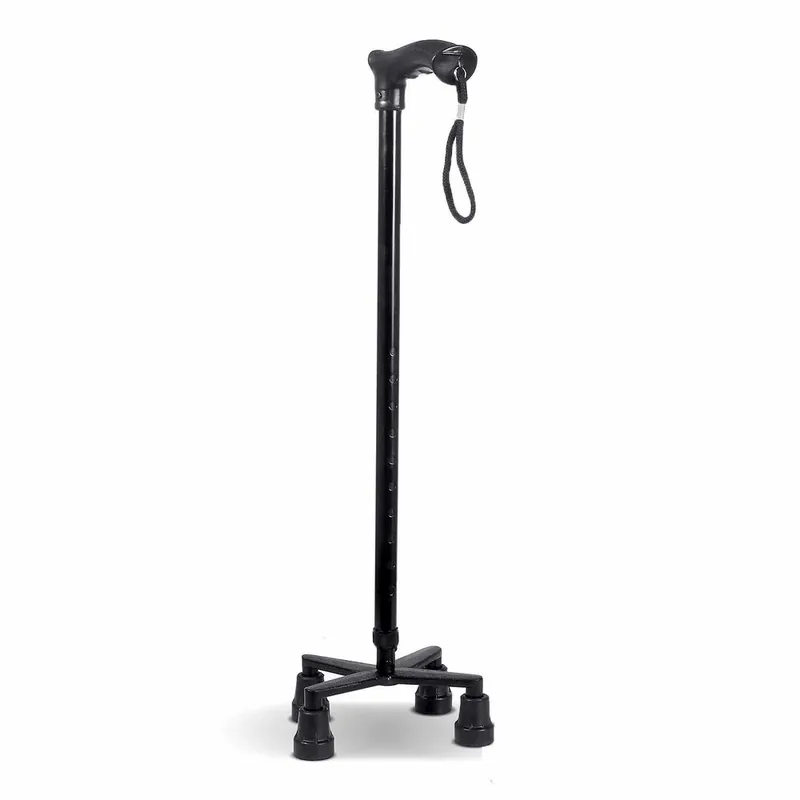
| Quadripod stick (4 feet) | Moderate to high | Weakness on one side, e.g. after a stroke; very stable base |
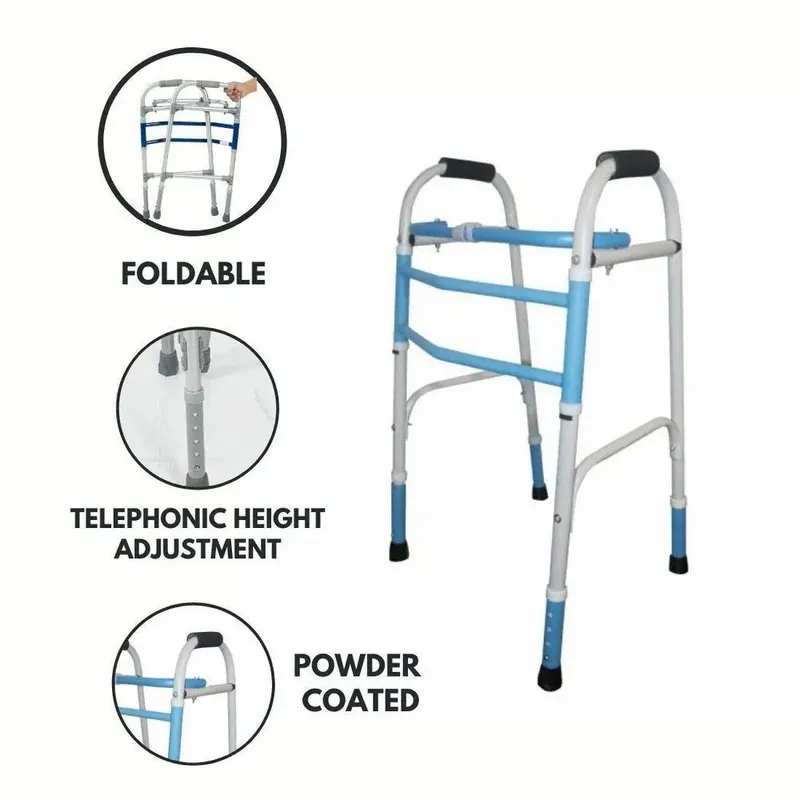
| Folding walker (no wheels) | High | After hip or knee surgery, significant weakness or balance problems |
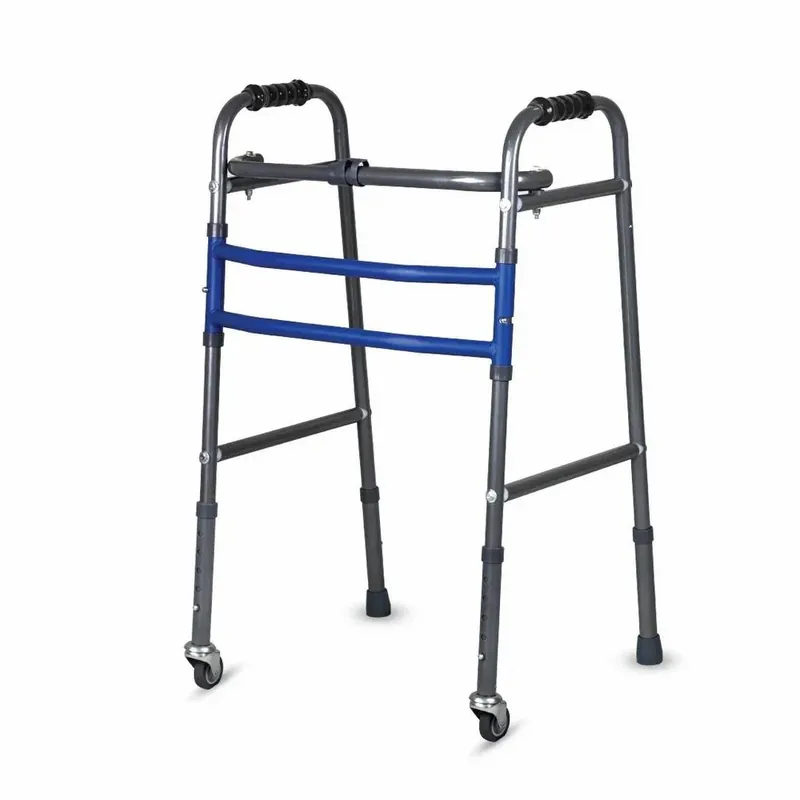
| Walker with wheels | High, smoother walking | People who can't lift a walker with each step, or tire easily |
Walking sticks
A Stick Single is light and discreet and works well when someone just needs a little extra balance. A Stick Tripod Metal Base or Stick Quadripod Plastic Base has a wider base that stands up on its own and gives noticeably more stability, which is often recommended after a stroke.
Which hand? Hold the stick in the hand opposite the weaker or painful leg, and move the stick forward together with the weaker leg.
Walkers
A walker gives support on both sides, so it's the right choice when a stick isn't enough. The Foldable Walker is lifted and placed forward with each step, which makes it very stable. The Foldable Walker with Wheels rolls forward instead, which suits people who find lifting a walker tiring, but it needs a bit more control. Both fold for storage and travel.
How to set the correct height
- Wear your usual everyday shoes and stand up straight.
- Let your arms hang relaxed by your sides.
- Adjust the stick or walker so the handle is level with the crease of your wrist.
- When you hold the handle, your elbow should bend slightly (about 15–20°).
Too high and the shoulders hunch; too low and the person stoops forward, which affects balance and posture.
Safety tips
- Check the rubber tips regularly and replace them when worn smooth.
- Make sure height-adjustment buttons have clicked fully into place.
- Remove loose rugs, cables and clutter from walking routes at home.
- Take extra care on wet floors and stairs. Walkers aren't meant for stairs.
A physiotherapist can recommend the right aid and teach the correct walking pattern, especially after surgery or a stroke.
If walking isn't possible for longer distances, see Types of Wheelchairs and How to Choose the Right One. Browse all Rehab Products.
Frequently asked questions
Should I use a walker or a walking stick?
Use a walking stick if you only need a little help with balance. Use a walker if you need support on both sides, for example after hip or knee surgery, or if a stick does not make you feel steady.
What height should a walking stick be?
With your arms hanging relaxed, the handle should be level with the crease of your wrist. When you hold it, your elbow should bend slightly, about 15–20 degrees.
Which hand should hold the walking stick?
Hold the stick in the hand opposite your weaker or painful leg, and move it forward at the same time as the weaker leg.
What is the difference between a tripod and a quadripod stick?
A tripod stick has three feet and a quadripod has four. Both stand on their own and are more stable than a single stick; the quadripod has the widest, most stable base.
Need help choosing?
Our team in Pune can recommend the right equipment for your patient or facility, and we deliver across India.