Quick answer
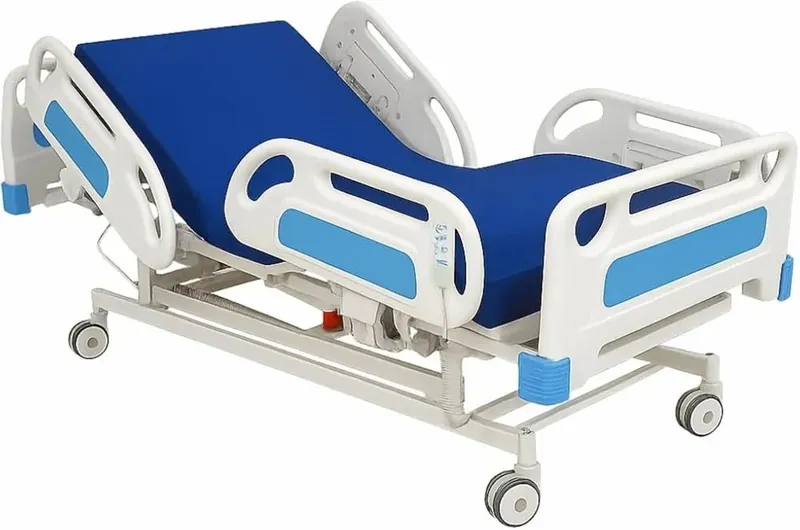
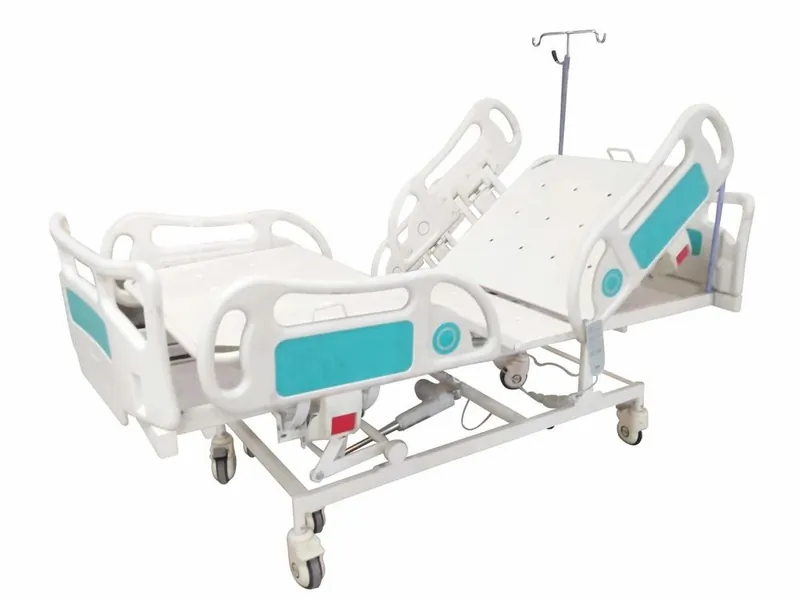
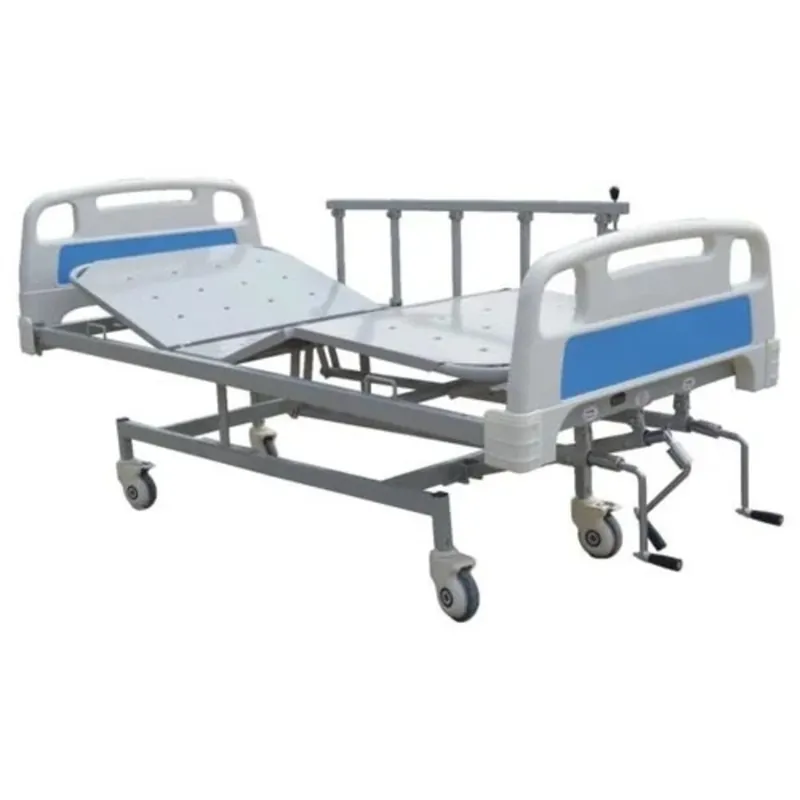
Electric beds adjust at the press of a button, so they are easier for patients and caregivers and best for bedridden patients. Manual beds use hand cranks, cost less and work without electricity. Three-function beds adjust backrest, knee rest and height; five-function beds add Trendelenburg and reverse Trendelenburg tilt.
Once you've decided you need a fowler or ICU bed, the next two questions are usually: manual or electric? and how many functions? Here's what actually changes, and how to decide.
Manual vs electric: side by side
| Manual bed | Electric bed | |
|---|---|---|
| How it adjusts | Hand cranks at the foot of the bed, one per section | Motors controlled by a hand remote (and sometimes a panel) |
| Effort for caregivers | Needs someone to turn the cranks | Press a button; no physical effort |
| Patient independence | Patient usually can't adjust it alone | Patient can often change position themselves |
| Electricity | Not needed | Needs a power socket |
| Cost | Lower | Higher |
| Best for | Shorter recoveries, budget-sensitive wards, areas with frequent power cuts | Bedridden patients, long-term home care, ICUs, one-person caregiving |
When an electric bed is worth it
- The patient is bedridden and needs repositioning many times a day.
- One family member or an elderly spouse does most of the caregiving.
- The patient is alert and would like to adjust the bed themselves, which helps comfort and dignity.
- The bed will be used for a long time.
When a manual bed makes sense
- The need is short-term, or the patient only sits up a few times a day.
- There are frequent power cuts where the bed will be used.
- Budget is the main concern, for example when furnishing many ward beds.
Three-function vs five-function
"Function" means one separate adjustment of the bed.
| Adjustment | 3-function | 5-function |
|---|---|---|
| Backrest up/down | ✓ | ✓ |
| Knee rest up/down | ✓ | ✓ |
| Whole-bed height up/down | ✓ | ✓ |
| Trendelenburg (head lower than feet) | – | ✓ |
| Reverse Trendelenburg (feet lower than head) | – | ✓ |
The two tilt positions are used by doctors and nurses for specific medical reasons. For most home recoveries a three-function bed is enough. Choose five-function for ICUs and critical care, or if the patient's doctor recommends tilt positions. Premium models add further positions and controls.
Our ICU bed range
- Premium ICU Electric Bed: our top-of-range multi-position electric bed
- Five-Function Electric ICU Bed: five motorised functions
- Three-Function Electric ICU Bed: three motorised functions
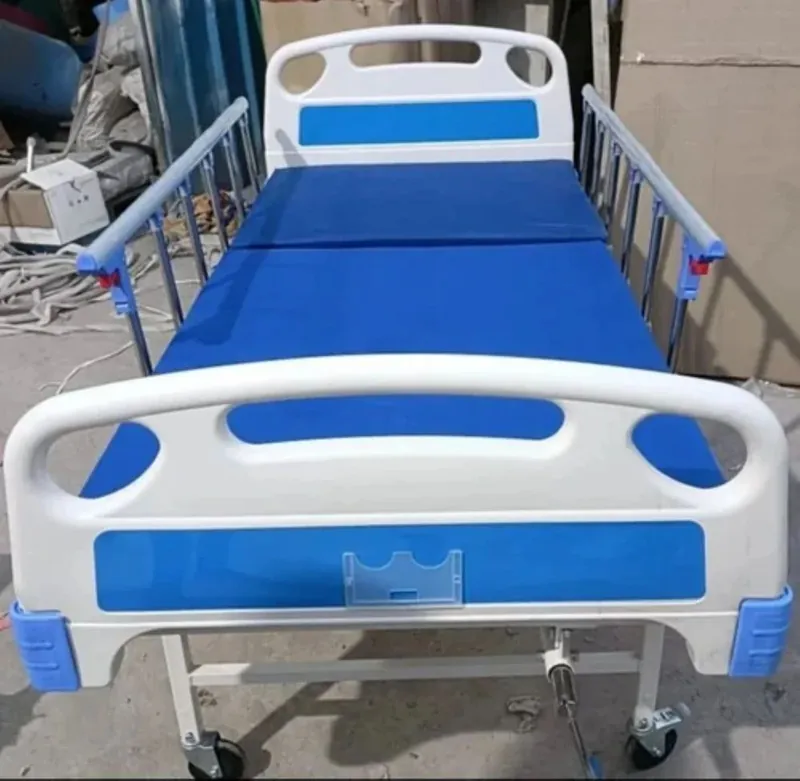
- Five-Function Manual ICU Bed with Collapsible Railing: crank-operated, five functions, collapsible railings
- Three-Function Manual ICU Bed with Collapsible Railing: crank-operated, three functions, collapsible railings
Prefer a simpler bed? See Fowler & Semi-Fowler Beds, available in both manual and electric versions. Need one only for a few weeks? Rent an ICU bed in Pune.
Frequently asked questions
Is an electric hospital bed better than a manual one?
For bedridden patients and long-term care, yes: it is much easier for caregivers and lets the patient adjust their own position. A manual bed is a good, lower-cost choice for shorter recoveries or places with frequent power cuts.
What happens to an electric bed during a power cut?
It stays in its current position but cannot be adjusted until power returns. If power cuts are frequent, consider a manual bed or keep the bed connected to inverter backup.
Do I need a five-function ICU bed at home?
Usually not. A three-function bed (backrest, knee rest and height) covers most home recoveries. Five-function beds add Trendelenburg and reverse Trendelenburg tilt, which are mainly used in ICUs or when a doctor specifically recommends them.
Need help choosing?
Our team in Pune can recommend the right equipment for your patient or facility, and we deliver across India.